Guide
Meat Internal Temperature Chart (Safe Cooking Temps)
Ad links. We may earn a commission on purchases, at no extra cost to you.
Cooking to a safe internal temperature is the single most reliable way to kill the bacteria that cause foodborne illness, including Salmonella, E. coli, Campylobacter, and Listeria. Color, texture, and time can all fool you. A burger can turn brown before it is safe, and a chicken breast can look done while the center is still undercooked. The only way to know for certain is to check the internal temperature with a food thermometer. The chart below lists the USDA safe minimum internal temperatures for every common category of meat, poultry, seafood, eggs, and leftovers.
Keep two ideas separate. The safe minimum temperature is a food-safety floor set by the USDA. Cook to at least this temperature and hold the rest time where one applies. Doneness preference is a matter of taste and applies only to whole-muscle cuts. A ribeye pulled at 145°F (63°C) is safe and eats as medium. If you prefer medium-well, you can take it higher by choice. That flexibility does not extend to ground meat or poultry, where bacteria are mixed throughout and the safe minimum is not optional.
How to use this chart and where to measure
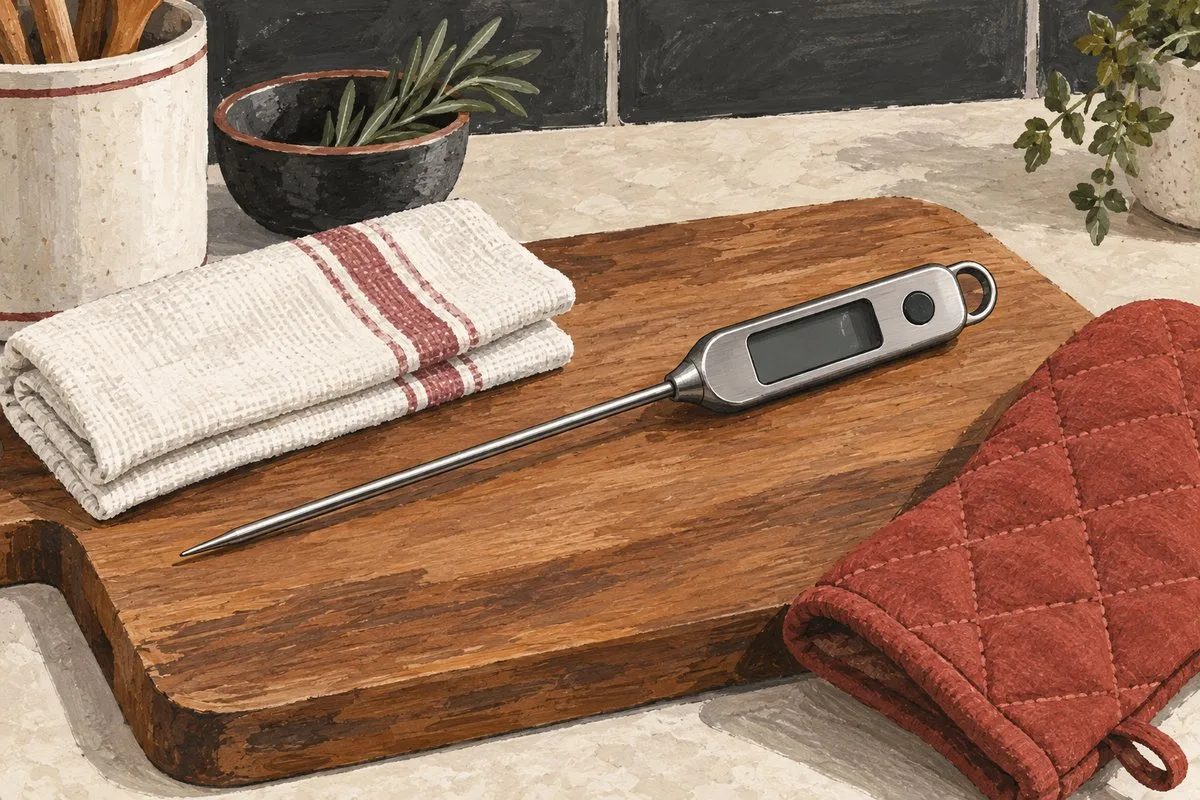
Insert an instant-read food thermometer into the thickest part of the food, away from bone, fat, and gristle, which conduct heat differently and can give a false reading. For thin foods like burgers, chops, and fillets, insert the probe sideways so the tip sits in the center. Take the reading near the end of cooking, and clean the probe with hot soapy water between different foods to avoid cross-contamination.
Two things happen after you pull food off the heat. Carryover cooking means the internal temperature keeps climbing about 5–10°F (3–5°C) as residual heat moves inward, which is a reason to start checking early. It is not a reason to take food off below its safe minimum: poultry and ground meat get no rest allowance at all (see the chart), and the 3-minute rest for whole cuts starts once 145°F has already been reached. For whole cuts of beef, pork, lamb, and veal, and for fresh ham, the USDA calls for a 3-minute rest at 145°F (63°C) before carving or eating. The rest helps destroy bacteria and lets juices redistribute.
| Food | Safe minimum °F | °C | Notes |
|---|---|---|---|
| Poultry, whole and ground (chicken, turkey, duck) | 165°F | 74°C | All poultry, including stuffing and ground chicken or turkey. No rest required. |
| Ground meats (beef, pork, veal, lamb) | 160°F | 71°C | Bacteria are mixed throughout, so cook fully. No rest required. |
| Fresh beef, veal, lamb: steaks, roasts, chops | 145°F | 63°C | Add a 3-minute rest before eating. Higher is a doneness choice, not a safety need. |
| Fresh pork: steaks, roasts, chops | 145°F | 63°C | Add a 3-minute rest. Trichinella risk is minimal at this temperature. |
| Fish and shellfish (finfish) | 145°F | 63°C | Flesh is opaque and separates easily with a fork. Cook shrimp, lobster, and crab until pearly and opaque. |
| Ham, fresh or raw | 145°F | 63°C | Add a 3-minute rest. Precooked ham, to reheat: 165°F (74°C) if repackaged or from a non-USDA source. |
| Egg dishes (quiche, casserole, frittata) | 160°F | 71°C | Cook eggs until yolk and white are firm; cook egg dishes to 160°F (71°C). |
| Leftovers and casseroles | 165°F | 74°C | Reheat all leftovers to 165°F (74°C) throughout; bring sauces and gravies to a boil. |
Tips for an accurate reading
- Use an instant-read digital thermometer for the fastest, most accurate reading, and calibrate it in ice water (32°F / 0°C) if readings seem off.
- Check the coldest spot, the thickest part away from bone and fat, and take a second reading elsewhere on large roasts.
- Insert the probe sideways into thin foods like burgers and fillets so the tip sits in the center.
- On large roasts you can pull 5–10°F (3–5°C) below your DONENESS target to account for carryover — but never below a safe minimum. Poultry and ground meat have to reach their number on the heat; they get no rest allowance.
- Honor the 3-minute rest for whole cuts of beef, pork, lamb, and veal, and for fresh ham, before carving.
- Clean the probe with hot soapy water between foods to avoid cross-contamination.
Frequently asked questions
Is 145°F safe for chicken?
No. All poultry, including chicken, turkey, and duck, whole or ground, must reach 165°F (74°C). The 145°F (63°C) minimum applies only to whole cuts of beef, pork, lamb, and veal, and to fish, never to poultry.
Why can I cook a steak to 145°F but ground beef needs 160°F?
Grinding spreads any surface bacteria throughout the meat, so the entire interior must reach a bacteria-killing temperature. Ground beef, pork, veal, and lamb need 160°F (71°C). A whole steak is safe at 145°F (63°C) because bacteria stay on the outside, which the heat sears.
Does the 3-minute rest really matter?
Yes. During the rest the temperature holds and residual heat keeps working, which the USDA counts toward destroying bacteria on whole cuts held at 145°F (63°C). It also lets juices redistribute. Poultry and ground meat do not require a rest for safety.
Can I rely on color or juices running clear?
No. Color is unreliable. Meat can brown or run clear before it is safe, or stay pink after it is safe, since a smoke ring or curing keeps ham and smoked poultry pink. A food thermometer is the only dependable check.
What temperature do leftovers need?
Reheat all leftovers and casseroles to 165°F (74°C) throughout, and bring soups, sauces, and gravies to a rolling boil. Refrigerate leftovers within 2 hours, or within 1 hour if it is above 90°F (32°C) outside.
Related guides