Guide
Pork Tenderloin Internal Temperature (Safe Temp)
Ad links. We may earn a commission on purchases, at no extra cost to you.
Pork tenderloin is the leanest, most tender cut on the pig, and it cooks fast. The USDA safe minimum internal temperature for whole cuts of pork — including tenderloin, chops, and roasts — is 145°F (63°C) followed by a 3-minute rest. That is the temperature at which the meat is safe to eat. In 2011 the USDA lowered its recommendation for whole pork from 160°F to 145°F, which is why modern pork can be served with a faint blush of pink and still be perfectly safe.
Keep in mind that 145°F is a safe minimum, not a doneness preference. Some cooks like their pork a touch more done; others pull it right at 145°F for maximum juiciness. Because tenderloin is so lean and thin, it goes from juicy to dry in just a few degrees, so the smart move is to pull it at 145°F (63°C) and let carryover heat plus the 3-minute rest finish the job. Ground pork is a different story — it must reach 160°F (71°C).
How to use this chart and where to measure
Temperature — not time or color — is the only reliable way to know pork tenderloin is done, so use an instant-read digital food thermometer and check near the end of cooking. Tenderloin tapers from a thick middle to a thin tail, so insert the probe into the thickest part, pushing it in from the end along the length of the cut or into the side until the tip sits in the center. Avoid the thin tapered tip, which reads done well before the middle does. Remember carryover cooking: the internal temperature typically climbs 3–5°F (about 2–3°C) while the meat rests, so start checking early — but since the target here is the 145°F (63°C) safe minimum, cook to that number before it comes off the heat, then rest 3 minutes.
| Doneness | Internal temp (thermometer) | Appearance | Notes |
|---|---|---|---|
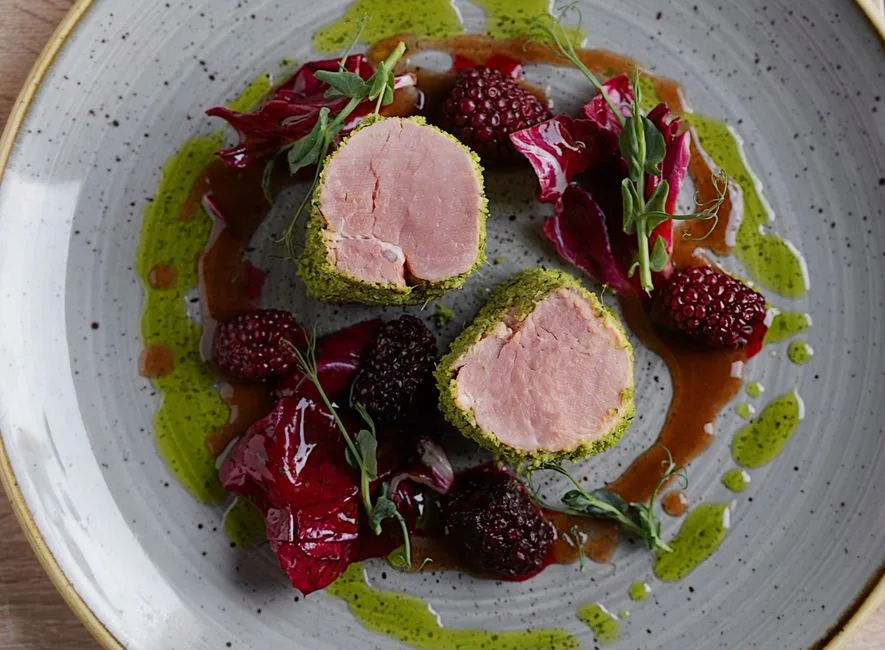
| USDA safe minimum | 145°F (63°C) + 3-min rest | Slightly pink center, clear juices | Safe to eat; the juiciest result for whole pork |
| Medium | 145–150°F (63–66°C) | Faint pink, moist | Popular target; pull at 145°F and rest |
| Medium-well | 150–155°F (66–68°C) | Barely any pink | Slightly firmer and a little drier |
| Well-done | 160°F (71°C) | No pink, opaque throughout | Safe but tends to dry out this lean cut |
| Ground pork (for reference) | 160°F (71°C) | No pink | Different rule — ground pork must reach 160°F |
- Start checking early for carryover: take the tenderloin off the heat at 145°F (63°C); it will keep rising a few degrees while it rests.
- Always rest 3 minutes: the USDA 3-minute rest holds the temperature and lets juices redistribute. Do not skip it.
- Sear, then roast: brown the tenderloin in a hot skillet, then finish it in a 400°F (204°C) oven until it hits 145°F. This builds a crust without overcooking the interior.
- Measure the thick middle, not the tail: the tapered end cooks faster and will give you a misleading reading.
- Don't judge by color alone: safe whole pork can still look slightly pink — only a thermometer confirms 145°F (63°C).
- Calibrate your thermometer in ice water (32°F / 0°C) so your readings stay trustworthy.
Is slightly pink pork tenderloin safe to eat?
Yes. For whole, intact cuts like tenderloin, a slightly pink center is safe once the meat reaches 145°F (63°C) and rests 3 minutes. The pink tint comes from the cut's natural pigments, not from being undercooked. Confirm doneness with a food thermometer rather than by color.
What is the safe internal temperature for pork tenderloin?
The USDA safe minimum internal temperature is 145°F (63°C), measured in the thickest part, followed by a 3-minute rest. That is the official safe temperature for all whole cuts of pork, including tenderloin.
Why does the USDA recommend a 3-minute rest?
During the rest the temperature stays at or above 145°F long enough to further reduce any harmful bacteria, and the juices redistribute so the meat stays moist. Leave the pork undisturbed for at least 3 minutes before slicing.
Can I cook pork tenderloin to 160°F like older recipes say?
You can, and it will be safe, but 160°F (71°C) usually dries out such a lean cut. The older 160°F guidance applied before the USDA lowered whole-pork guidance to 145°F (63°C) in 2011. For juicy results, aim for 145°F and rest.
Where exactly do I put the thermometer in a tenderloin?
Insert an instant-read thermometer into the thickest section — either from the end running along the length of the cut or into the side — so the tip rests in the center. Avoid the thin tapered tail and any part touching the pan.
See the full USDA safe temperatures for every cut on our master meat internal temperature chart.
Related guides