Guide
Chicken Temperature Chart: Safe Internal Temperatures for Every Cut
Ad links. We may earn a commission on purchases, at no extra cost to you.
Chicken is done and safe to eat when the thickest part of the meat reaches 165 °F (74 °C). That single number covers every form the bird comes in — boneless breast, bone-in thigh, drumsticks, wings, a whole roast chicken, ground chicken, chicken sausage and reheated leftovers. The one useful refinement is that dark meat is not at its best at the minimum: thighs, legs and wings become noticeably more tender when they are carried on to roughly 175–195 °F (80–90 °C), because the connective tissue in them needs heat and time to soften. White meat is the opposite case and dries out quickly above the mark, so breast is the cut where you actually want to stop at 165 °F (74 °C). Everything below is an editorial guide to reading those numbers correctly rather than a set of measurements of our own.
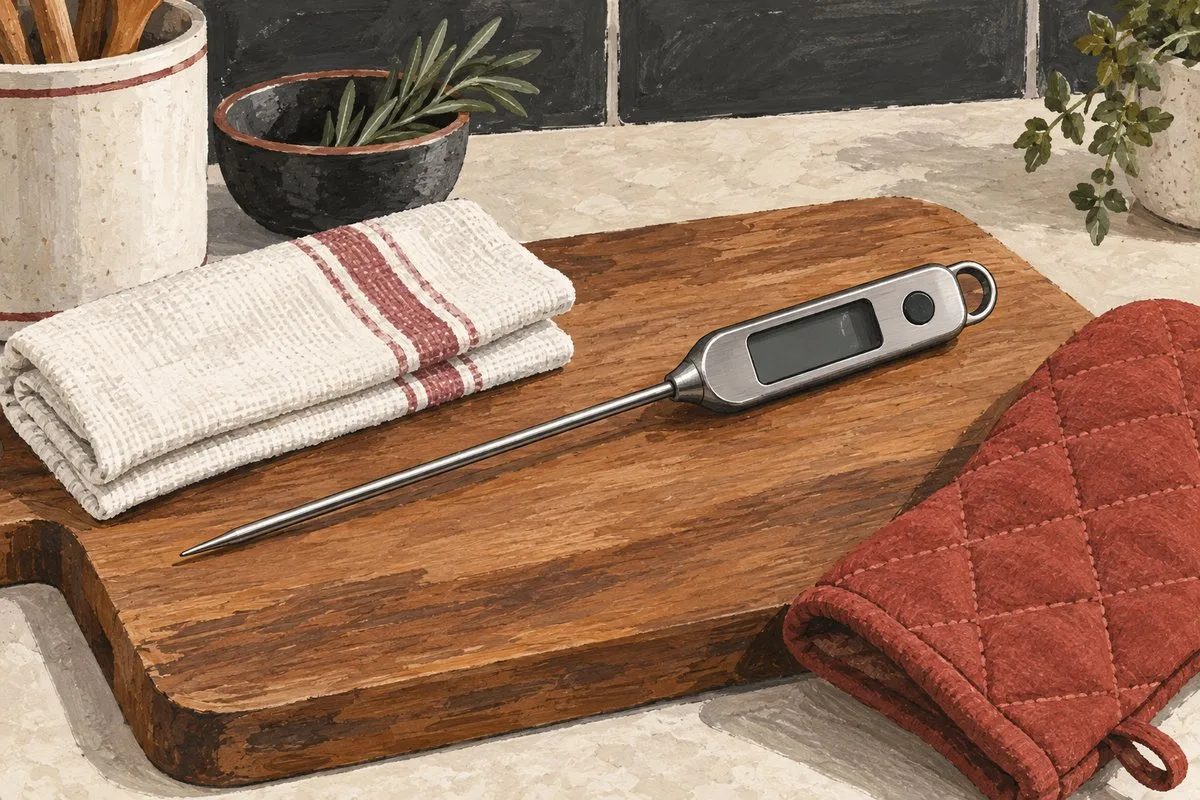
- Check the thermometer in a glass of ice and water — it should read 32 °F (0 °C) — so you know the readings are trustworthy.
- Identify the coldest spot on the cut: the thickest part of the breast, or the inner thigh where the leg meets the body on a whole bird.
- Insert the probe through the side of the meat rather than straight down, so the tip travels along the thickest axis.
- Push the tip slightly past the centre, then draw it back slowly and watch the display for the lowest number it reports.
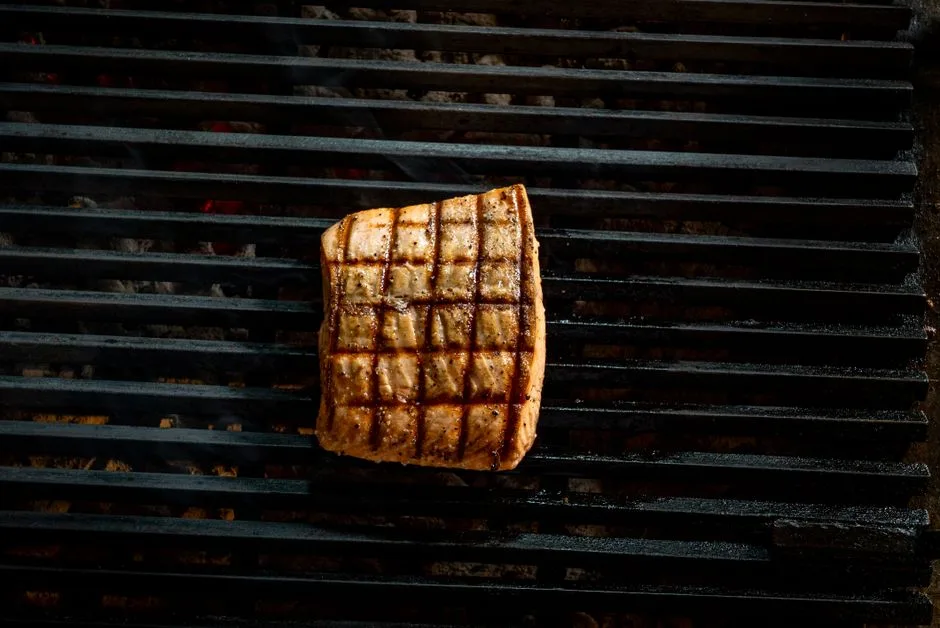
- Keep the tip away from bone, joints, cartilage and the pan or grill surface, all of which read hotter than the meat itself.
- Confirm the reading in a second spot, or in a second piece, and return the chicken to the heat if any reading is below 165 °F (74 °C).
The chicken temperature chart at a glance
Every figure below is the internal temperature at the coldest point of the meat, taken with the probe tip away from bone. Where a range appears, the lower number is the safety mark and the higher number is where the cut tends to eat best.
Note that only one number in the chart is a food-safety threshold. The higher figures for dark meat are a texture preference, not an extra safety requirement — you are free to stop at the minimum if you like the firmer bite.
- Boneless or bone-in chicken breast: 165 °F (74 °C)
- Chicken thigh, boneless or bone-in: safe at 165 °F (74 °C), best around 175–185 °F (80–85 °C)
- Drumsticks and wings: safe at 165 °F (74 °C), best around 175–190 °F (80–88 °C)
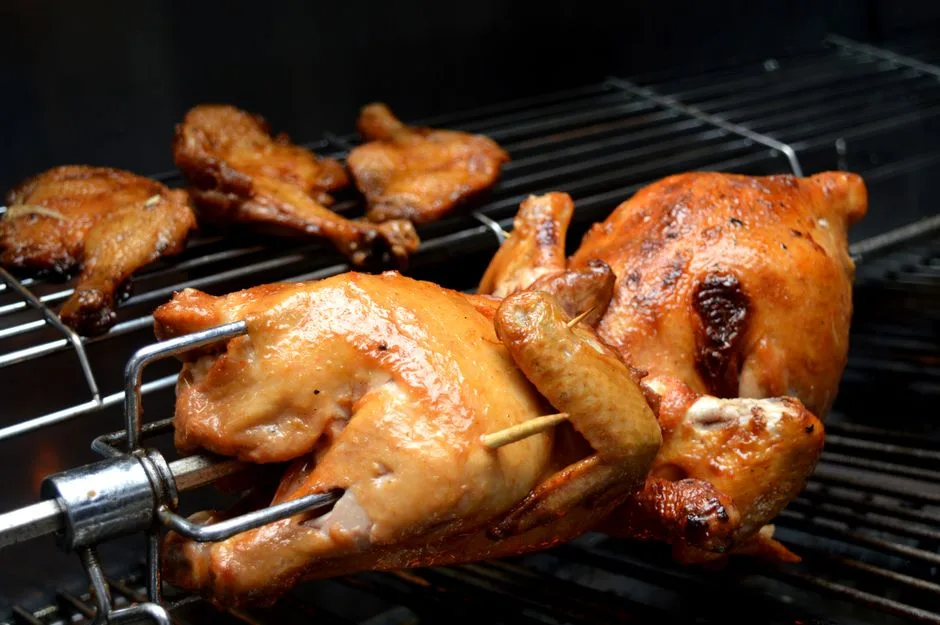
- Whole roast chicken: 165 °F (74 °C) in both the thickest part of the breast and the inner thigh
- Ground chicken — burgers, meatballs, meatloaf: 165 °F (74 °C) all the way through
- Fresh chicken sausage: 165 °F (74 °C)
- Stuffing cooked inside a bird: 165 °F (74 °C) at the centre of the stuffing itself
- Braised, pulled or confit-style legs: often taken to about 190–200 °F (88–93 °C) so the meat shreds
- Leftovers and cooked chicken being reheated: 165 °F (74 °C), steaming hot throughout
Why dark meat wants a higher number than white meat
Breast is lean, fine-grained muscle with little connective tissue. Past the safety mark its proteins keep contracting and squeezing out moisture, which is why an overshot breast turns chalky and stringy while a thigh cooked to the same temperature is merely fine. Breast is therefore the cut worth watching closely and pulling promptly.
Legs, thighs and wings do more work on a live bird and carry far more collagen. Collagen only starts converting into gelatin well above the point where chicken is safe, and that conversion is what makes a thigh silky rather than rubbery. Held in the upper range, dark meat also keeps eating juicy because the gelatin and the higher fat content hold on to moisture that lean breast simply does not have.
This is the practical reason many cooks separate a whole bird into parts, or roast it breast-side down for part of the time: the two muscle types genuinely want different finishing temperatures, and a single roasting time cannot serve both.
- Breast: stop at the safety mark, watch it closely, do not chase colour
- Thigh and drumstick: a further 10–25 °F (5–15 °C) improves texture rather than risking it
- Spatchcocking or jointing the bird lets each muscle type finish where it wants to
How to take a reading you can trust
A temperature chart is only as good as the reading you take, and most doneness arguments in home kitchens are really thermometer-placement arguments. The number that matters is the lowest temperature anywhere in the piece, not the first number the display settles on.
Insert the probe through the side of a thick cut rather than straight down from the top. Entering from the side lets the tip travel along the long axis of the muscle and pass through the centre, while a vertical stab in a thin cutlet often has the tip out the other side and reading pan heat.
Bone, cartilage and the pan or grill surface all conduct heat differently from meat and will report temperatures that are not representative. Keep the tip in muscle, and take at least two readings — one in the breast and one in the inner thigh on a whole bird, or one per piece when you are cooking a tray of parts.
- Check the thermometer in ice water: it should read 32 °F (0 °C)
- Probe from the side, through the thickest part of the cut
- Push past the centre, then draw back slowly and note the lowest number
- Stay clear of bone, joints, gristle and the cooking surface
- Read the largest or thickest piece — it is the one that lags
Carryover heat and resting
Meat keeps cooking after it leaves the heat, because the hot outer layers continue to drive energy inward. On chicken the effect is real but modest compared with a large roast: a whole bird carries over more than a thin cutlet, and a piece pulled from a hot oven carries over more than one lifted from a gentle poach.
That leaves a judgement call on breast. Some cooks remove it a few degrees short and let carryover finish the job, which is sound provided you verify with the thermometer after resting that the meat actually reached 165 °F (74 °C) at the thickest point before it goes on the plate. If it stalls short, it goes back on the heat — an early pull is a technique, not a licence to serve undercooked chicken.
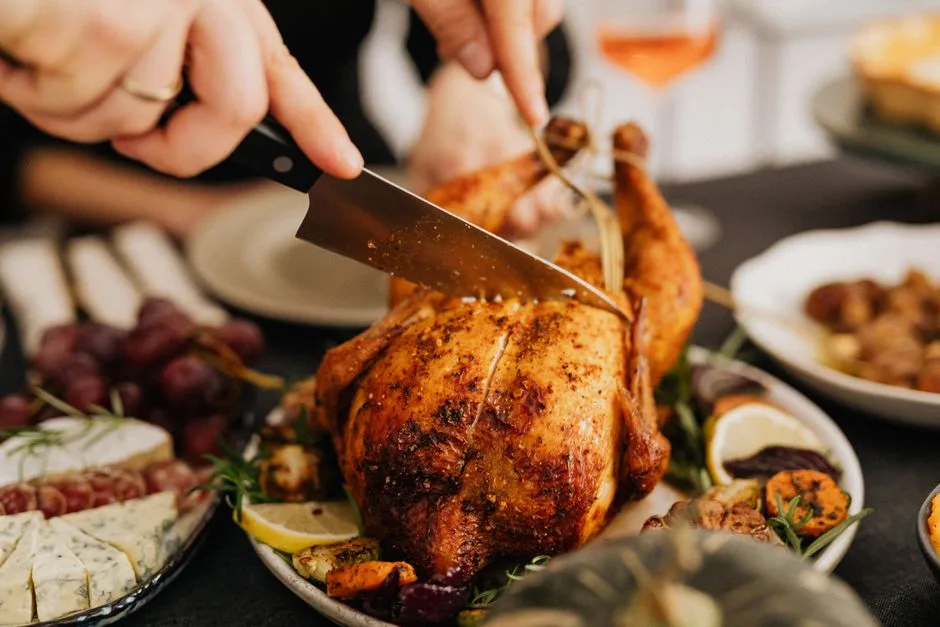
Resting is worth a few minutes regardless. It lets the temperature even out between surface and centre and gives the muscle fibres a chance to reabsorb some of the juice they squeezed out, so less of it ends up on the board when you carve.
- Small cuts: a few minutes of rest is plenty
- Whole bird: 10–20 minutes, loosely tented, before carving
- Always confirm the safety mark on the plate side of the rest, not only before it
Where a low-temperature approach changes the rules
The 165 °F (74 °C) figure is an instant reading: reach it and you are done immediately. Food safety is really about a combination of temperature and time, and holding chicken steadily at a lower temperature for long enough achieves the same reduction in bacteria. This is the principle sous vide cooking relies on when it produces breast that is visibly juicier than anything an oven can manage.
The catch is that this only works with a genuinely stable, accurate temperature and a validated hold time for the given thickness — the sort of figures found in published pasteurization tables. A conventional oven, pan or grill does not hold a low temperature reliably enough to substitute for the instant reading, and guessing at hold times is precisely where low-temperature cooking goes wrong.
Unless you are working with equipment that holds a set temperature and a table you trust, treat the chart above as the working rule and leave the time-and-temperature approach to setups built for it.
- The chart figures assume an instant reading, no hold time required
- Low-temperature cooking substitutes time for temperature — but only with stable equipment
- Do not improvise hold times on a grill, in a pan or in a domestic oven
Signs that do not tell you chicken is done
Several traditional doneness tests are unreliable enough to be worth naming. Clear juices are the most common: juice colour depends on how the meat was chilled, how much myoglobin it carries and how long it has been stored, and fully cooked chicken can run faintly pink while undercooked chicken can run clear.
Pink meat near the bone is another false alarm. In younger birds, pigment from the marrow can leach into the surrounding meat and set to a pink or reddish tint that survives cooking entirely. Smoked chicken can show a pink ring for the same reason a smoked brisket does, without being underdone.
Texture cues — firmness to the touch, how easily a leg twists in its socket, timing from a recipe — depend on the size and starting temperature of the bird and on how accurate your oven really is. They are useful for knowing when to start checking, not for deciding to serve.
- Clear juices: not a doneness test
- Pink near the bone: usually pigment, not undercooking
- Recipe timings: a prompt to check, never a substitute for a reading
- Colour of the surface: tells you about browning, not about the centre
Frequently Asked Questions
Does dark meat really need to reach 165 °F (74 °C) too?
Yes — the safety mark is the same for every part of the bird. The difference is that dark meat is not at its best there. Thighs, drumsticks and wings hold together and eat far better when they are carried on to roughly 175–195 °F (80–90 °C), because their connective tissue needs that extra heat to soften. Stopping at the minimum is safe, just chewier.
Is pink chicken always undercooked?
No. Pigment from bone marrow can tint the meat next to the bone pink in younger birds, and it stays that way however long you cook it. Smoked chicken can develop a pink ring for the same chemical reason as smoked beef. Colour is not a doneness indicator in either direction — the only reliable answer comes from a thermometer in the thickest part of the meat.
Can I take chicken off the heat before it reaches 165 °F (74 °C)?
You can remove it a few degrees short and let carryover heat finish the job, which is a common way to keep breast from drying out. The condition is that you check again after resting and confirm the thickest point actually reached the safety mark. If it stalled below, put it back on the heat rather than serving it.
Where exactly do I put the thermometer in a whole chicken?
Take two readings. One goes into the thickest part of the breast, entering from the side and stopping short of the cavity. The other goes into the inner thigh, angled in from the side where the leg joins the body, with the tip clear of the joint and the thigh bone. The lower of the two readings is the one that decides whether the bird is done.
What temperature should leftover chicken be reheated to?
Bring reheated chicken back to 165 °F (74 °C) throughout, not just at the surface. Thick pieces and dense casseroles are the ones that catch people out, since a microwave in particular can leave a cold core under a hot outside. Stir or turn partway through, then check the centre of the largest piece before serving.
Related guides