Guide
USDA Safe Minimum Internal Temperature for Fish: What 145°F Really Means
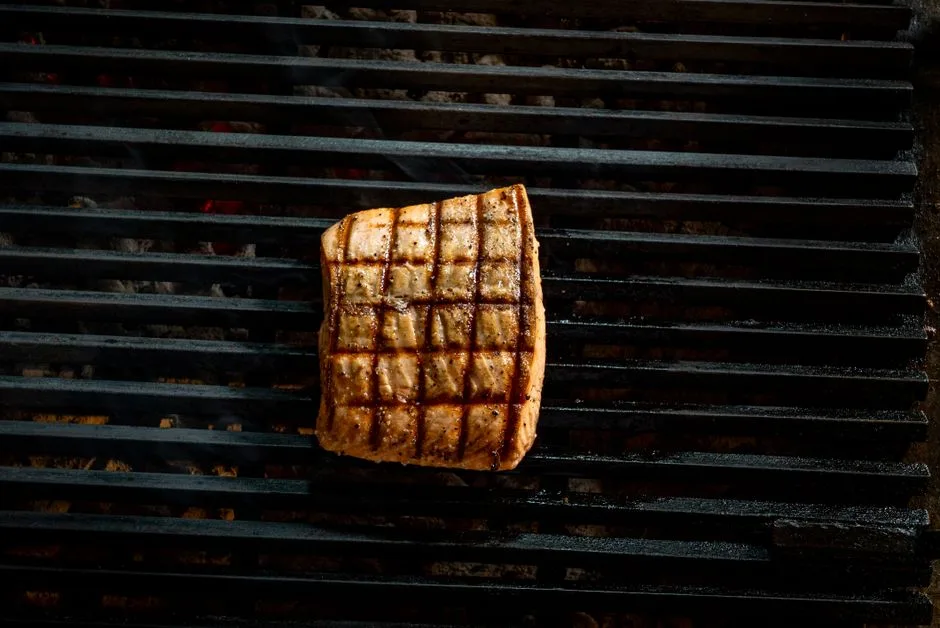
The safe minimum internal temperature for fish is 145°F, or about 63°C, measured at the thickest part of the fillet, steak or whole fish. That is the number behind the phrase people search for as the USDA safe minimum internal temperature for fish, and it is the same figure for shrimp, lobster, crab and scallops as it is for salmon or cod. Unlike whole cuts of beef, pork and lamb, fish carries no required rest time: it is done the moment the thermometer settles on 145°F, not three minutes later. The cue usually given alongside the number is that the flesh should look opaque and separate easily with a fork. If the figure alone is what you came for, that is it. The rest of this page covers where to put the probe so the reading means something, why a shrimp and a swordfish steak share one number, what to do with shellfish that never gets probed, and what is actually being traded away when a kitchen deliberately stops short of 145°F.
- Identify the thickest part of the fillet, steak or whole fish, since that is where the coldest flesh will be.
- Slide an instant-read probe in from the side, horizontally, so the tip finishes in the centre of the flesh instead of passing through into the pan or tray.
- Keep the tip away from bone, skin, stuffing and any metal surface, all of which will distort the reading.
- Hold the probe still and wait for the number to stop moving before reading it.
- Take a second and third reading in other thick spots on an unevenly shaped piece, and treat the lowest number as the real one.
- Confirm the lowest reading is at least 145°F, then remove the fish from the heat; no rest period is required.
- Wash the probe stem before it touches any other food.
The Short Answer, and What the Number Covers
145°F is a floor, not a target. It is the point at which the flesh is considered safe to eat, and everything above it is a texture decision rather than a safety one. Because it is a minimum, the reading that matters is the lowest one you can find in the piece, not the average and not the reading at the edge that has been sitting against a hot pan.
The number is also instantaneous for fish. There is no holding period and no carryover requirement built into it, which is why the widely repeated three-minute rest belongs to whole cuts of red meat and not to a salmon fillet. Once the coldest part of the fish reads 145°F, the safety condition is met.
One thing the number does not cover is reheating. Fish that has already been cooked, cooled and stored is treated like any other leftover, and the reheating figure is higher than the cooking figure.
- Fin fish — salmon, cod, tilapia, halibut, tuna, trout: 145°F at the thickest point
- Shrimp, lobster and crab: 145°F; the flesh turns pearly and opaque
- Scallops: 145°F; they turn milky white or opaque and firm up
- Clams, mussels and oysters: cooked until the shells open, since a probe is impractical
- Cooked fish being reheated as a leftover: 165°F
- No rest time is required for fish at any of these figures
Why Fish Sits at 145°F While Poultry Sits Higher
Safe minimum temperatures are set per food category, not per animal, and the differences track how each food is contaminated and how it is structured. Poultry sits at the top of the common chart. Ground meats sit in the middle, because grinding takes whatever was on the surface of the cut and distributes it throughout the mass, so the interior can no longer be assumed to be cleaner than the outside. Whole muscle cuts sit lower, at the same 145°F as fish, because contamination on an intact cut is largely a surface problem that direct heat handles first.
Fish falls into that intact-muscle logic. It is short-fibered, low in connective tissue, usually cooked as a whole piece rather than ground, and it cooks through quickly because the pieces are thin. The pathogens associated with seafood are also a different set from those that drive the poultry figure.
It helps to understand that 145°F is one point on a curve, not a magic threshold. Pathogen reduction is a relationship between temperature and time: lower temperatures held for longer periods achieve comparable reduction to a higher temperature reached for an instant. That relationship is the whole basis of sous vide cooking, where a piece of fish may never approach 145°F but is held at a lower temperature long enough to compensate. The single-number chart exists because most home cooking is not held at a controlled temperature for a measured duration, and a single instantaneous figure is the version that survives contact with a real kitchen.
In our editorial assessment, the practical value of knowing this is that it stops the number from feeling arbitrary. 145°F is not the temperature at which fish becomes edible; it is a conservative single point chosen so that no timing or holding judgement is required from the cook.
- Poultry, whole or ground: 165°F
- Ground beef, pork, veal and lamb: 160°F
- Whole cuts of beef, pork, veal and lamb: 145°F plus a three-minute rest
- Fish and shellfish: 145°F, no rest
- Egg dishes: 160°F
Where to Put the Probe
A thermometer reading is only as good as its placement, and fish is the food where placement goes wrong most often. Fillets are thin, so a probe pushed straight down from above passes through the flesh in a fraction of an inch and ends up reading the pan, the foil or the sheet tray underneath. That reading will be far too high and will tell you the fish is done long before it is.
The fix is to enter from the side and travel horizontally, so the sensing tip finishes in the middle of the flesh with fish all around it. Instant-read probes sense at or near the tip, not along the whole stem, which is why the tip position is the only thing that matters.
On a whole fish, aim for the thickest section behind the head and stop short of the backbone. Bone conducts heat differently from muscle and will skew the reading. If the fish is stuffed, the stuffing is its own measurement and needs to be checked separately, since it sits in the coldest part of the cavity.
- Enter from the side of a fillet, never straight down through a thin piece
- Keep the tip clear of bone, skin, stuffing and the pan surface
- Take two or three readings on an unevenly shaped piece and trust the lowest
- Tail ends and thin flaps will run ahead of the thick centre — check the centre
- Clean the stem between checks so a probe that touched undercooked fish is not carried into a finished piece
Shellfish and Whole Fish: Same Number, Different Cues
Shrimp, scallops and lobster tails share the 145°F figure, but they are often too small or too awkward to probe reliably, so visual cues do the work. Shrimp go from translucent grey to pearly and opaque, and the tail curls into a loose C; a tight O usually means it has gone past the point where the texture is good. Scallops turn from glassy to milky white and firm slightly under a fingertip. Lobster and crab flesh turns opaque and pulls away from the shell.
Bivalves are a separate case entirely. Clams, mussels and oysters are cooked until their shells open, which is the practical stand-in for a temperature reading in a food you cannot probe. Shells that stay shut through cooking are conventionally discarded rather than pried open.
For whole fish, the flesh at the thickest point should come away from the bone cleanly. The classic fork test — flesh that separates into flakes with light pressure — is a genuine doneness cue and remains the fallback when no thermometer is available, but it is species-dependent. Dense fish such as tuna and swordfish do not flake in the way that cod or haddock does, and a cook waiting for flaking in a tuna steak will overshoot badly.
A related visual is albumin, the white protein that seeps out of salmon and appears as curd on the surface. It is harmless, but heavy albumin is a signal that the fish has been pushed hard, either by high heat or by a final temperature well past the minimum.
- Shrimp: opaque and pearly, tail in a loose C rather than a tight O
- Scallops: milky white, opaque and just firm
- Bivalves: cook until the shells open; discard those that stay closed
- Flaking works for cod, haddock and pollock — not for tuna or swordfish
- Heavy white albumin on salmon means the fish has run hot, not that it is unsafe
When Cooks Deliberately Stop Below 145°F
Plenty of restaurant salmon is served well below 145°F, tuna is regularly seared rare with a raw centre, and raw preparations such as sushi, sashimi, crudo and ceviche never see cooking heat at all. None of this is a mistake or an oversight. It is a deliberate trade of safety margin for texture, made by kitchens that control their sourcing tightly, and it is worth naming as a trade rather than pretending the two positions are the same.
The distinction that matters is parasites versus bacteria. Freezing addresses parasites and does nothing to bacteria; heat addresses both. Fish intended to be eaten raw or barely cooked is commonly frozen commercially as a parasite control — around -4°F held for roughly a week is the parameter usually cited, and most domestic freezers neither reach nor hold that reliably. That is the reason the advice to freeze supermarket fish at home before eating it raw is unsound: the equipment is not the same equipment.
The other half of the picture is who is eating. A safety floor exists precisely for the people whose margin for error is smallest, and undercooked or raw seafood is the wrong choice for pregnant people, young children, adults over 65 and anyone whose immune system is suppressed. For that group, 145°F is not a suggestion to be weighed against texture; it is the point of the number.
This page takes no position on whether medium-rare salmon is worth it. It is a real choice made by real cooks. It is simply not what the 145°F figure describes, and describing it as safe because a restaurant does it confuses a sourcing-and-risk decision with a temperature standard.
- Freezing handles parasites; only heat handles bacteria
- Home freezers generally cannot hold the temperatures used for commercial parasite control
- Raw and rare seafood is not appropriate for pregnancy, young children, older adults or immunocompromised eaters
- Sous vide reaches safety through holding time at a lower temperature, which is a different framework from an instantaneous reading
- Marinating in citrus, as in ceviche, changes texture and appearance but is not a substitute for cooking
Getting the Reading Right: Thermometers, Carryover and the Cold Chain
A thermometer that has been dropped, left in a hot pan or bought years ago may be reading several degrees off, and a few degrees is the entire margin on a thin fillet. Two checks catch most of this. In a glass packed with crushed ice and topped with water, a stirred probe should settle at 32°F. In vigorously boiling water it should read about 212°F at sea level, and lower as altitude increases. Some digital models can be recalibrated; the rest simply need their offset noted or need replacing.
Probe geometry matters as much as accuracy here. A thin-tipped instant-read sits properly inside a half-inch fillet; a thick dial stem needs far more flesh around it to give a true centre reading, and on thin fish it is essentially unusable.
Carryover cooking is smaller in fish than most cooks expect. A thick centre-cut piece may climb a few degrees after it leaves the heat; a thin fillet climbs almost nothing. Pulling thin fish well short of the mark on the assumption of a big rise is a reliable way to serve it underdone.
Everything around the cooking step matters too. Raw fish belongs at 40°F or below, thawed in the refrigerator, under cold running water, or in the microwave if it goes straight into the pan afterwards — never on the counter. Cooked or raw, fish should not sit out more than two hours, and no more than one hour when the room is above 90°F. Boards, knives and the thermometer stem that touched raw fish need washing before they touch anything cooked.
- Ice-water check: a stirred probe should read 32°F in an ice slush
- Boiling check: about 212°F at sea level, lower at altitude
- Use a thin-tipped probe for fillets under an inch thick
- Expect only a few degrees of carryover in thick pieces and near zero in thin ones
- Keep raw fish at 40°F or below; thaw in the fridge, in cold water or in the microwave
- Two hours maximum out of refrigeration; one hour above 90°F
Frequently Asked Questions
What is 145°F in Celsius?
About 63°C. The exact conversion is 62.8°C, and it is normally rounded up to 63°C so that rounding never pushes you below the minimum. If your thermometer only displays whole Celsius degrees, treat 63°C as the number to hit.
Does fish need to rest after cooking?
Not for safety. Fish meets its safe minimum the instant the coldest part reads 145°F, with no holding period attached. The three-minute rest that appears on temperature charts belongs to whole cuts of beef, pork, veal and lamb. You may still choose to let a thick piece sit briefly for the sake of the texture or the plating, but that is a cooking preference and nothing is being achieved on the safety side.
Is medium-rare salmon at around 125°F safe?
It is below the safe minimum, so it is not covered by the 145°F figure. Restaurants that serve salmon that way are relying on sourcing and handling to manage the risk rather than on heat, and that is a deliberate trade rather than an equivalent to cooking it through. For pregnant people, young children, older adults and anyone immunocompromised, it is the wrong trade, and cooking to 145°F is the appropriate choice.
Can I skip the thermometer if the fish flakes easily with a fork?
Flaking is a legitimate doneness cue and it is the sensible fallback when no thermometer is available, but it is indirect and it varies by species. Cod, haddock and pollock flake clearly. Tuna and swordfish are dense and do not, so waiting for flaking in those overshoots badly. A probe reading at the thickest point is the only direct check, and on thin fillets it is the only one with any precision.
Does 145°F apply to frozen breaded fish sticks and fillets?
Packaged frozen seafood comes with its own cooking instructions, which account for the coating, the starting temperature and the specific product, and those instructions should be followed rather than improvised on. Verify with a probe once the item is out of the oven, because a browned, crisp coating tells you about the breading and nothing about the fish inside it. The same applies to cooking plain fish from frozen: it is safe to do, it takes noticeably longer than thawed fish, and the internal reading is what closes the question.
Related guides